Black Butterfly
This project is supported by the Unshame CA campaign, funded by the California Department of Health Care Services (DHCS) through a grant administered by Shatterproof.
by Janine Blake
in conversation with Amelia Rayno
My mom was a classy lady — in the hood.
She was a rebel. She went against the grain.
She was really smart, she just chose a different path than her sister, who went to beauty school and opened a salon in Beverly Hills. My mom liked the ‘hood, and for that she was the black sheep of the family.
But to me, she was the bomb, and I was her biggest cheerleader. She was a caretaker, and she was always entertaining. As a kid I would sneak out of my room just watch her interact with her guests. She was beautiful; always dressed to the nines, hair done.
I didn’t know it then, but she was hurting, too. Even when she looked amazing on the outside, on the inside she was full of pain, and trying to numb it.
I’m a lot like her, right down to the addiction.
Close and then far
Growing up, my mom and I were really close. I had an older sister and brother, but their dad took them when I was young because my mom was shooting up heroin — though I didn’t know that. For about eight years, I was like an only child. We had our own apartment, and I had my own room. Life was good. I only saw her injecting once, by mistake, and I figured she was just taking some medicine.
And then all of the sudden, we were living piddle to post.
One day, my mom told me and my baby sister that we were going to spend the weekend at some lady’s house and she’d be back for us on Monday. Every Monday after, I was packed in the living room with my sister, waiting for my mom to come, because I believed her.
But I didn’t see her for two years.
That’s how foster care started.
I didn’t know anything about getting whooped before that; my mom had never hit us. But this lady pulled my hair, ripped it out from the roots. She whopped my little sister, who was just a year old.
After two years, I ran away — went to school on a Friday and never came back. When Sunday came, I didn’t have nowhere to go so I called my grandmother, who I never liked. And when she came to get me, my mom was with her.
In my head I was thinking “Where have you been??”
But I didn’t ask her that because I was just so happy to see her.
Somehow, some way, my mom ended up getting us back. She had another baby by that time. Years passed, and she would leave a lot. She taught me to be independent and being at home alone was normal for me. I’d cook and care for my little sisters. I bathed them and combed their hair. I ironed the clothes and got them dressed. I had always loved dolls and here I had two live babies.
My grandmother came over one night and ask me how long my mother had been gone.
I said three days.
She called the police.
After that, all of us kids were separated and I stayed in a foster home until I was 18.
‘When I’m high, I don’t have to feel’
It was around then that I first tried crack cocaine. My big sister, who I really didn’t meet until then, introduced me to it — gave me $20 and told me to knock on a door. The guy gave me a rock and I was baffled.
“Twenty dollars for this little thing??”
But when I smoked it, I liked it, because it took the pain away.
And that was a wrap.
Here I am 56 years old, and I still like my primos because it still takes the pain away.
I’d rather take a punch than to have hurt feelings. I’ve been suicidal for a lot of my life, and I can’t stand to let sadness hold me hostage.
But when I’m high, I don’t have to feel.
I can just be happy.
‘We are the underdogs’
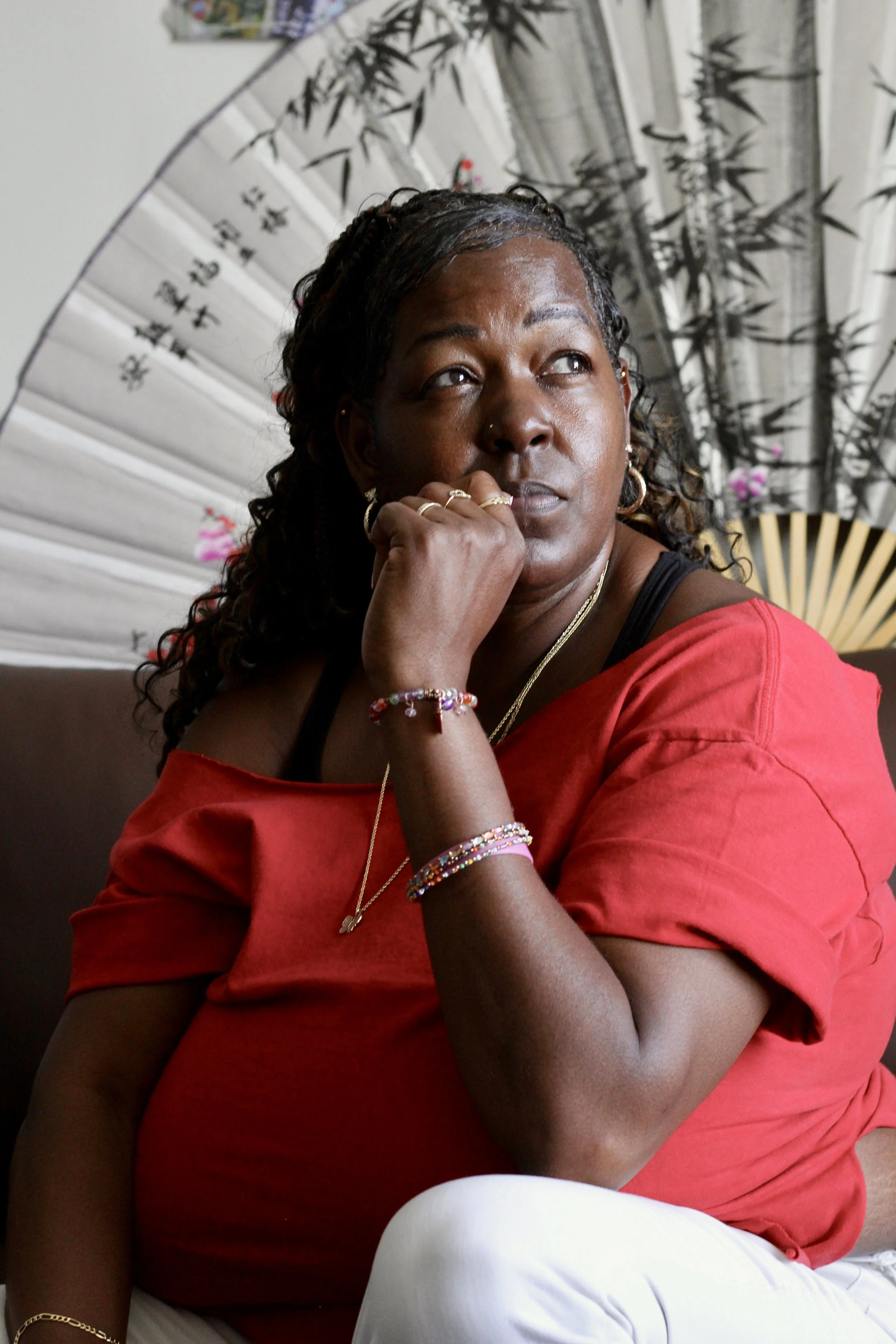
I first came to Skid Row after I was emancipated from the foster home. I was the youngest one down here, and everyone told me I was pretty. It wasn’t hard to get drugs. I met my daughters’ dad down here — I was 18 and he was 35. I tried to go to college a few times, but always dropped out.
Later, I lost my kids because I was using — my oldest was eight, just like me when my mom lost me. I didn’t want to be like her in that way. I did everything they told me to do to get them back, but it was never enough.
The second time I came to Skid Row was for a drug program. Before I had even graduated, they hired me as a case manager. But I wasn’t ready for the money it brought. I started using again.
Every time I was on top of my game, I self sabotaged. Something in me always felt like I didn’t deserve it because I lost my kids due to my addiction.
I used to question God: ‘Why you keep waking me up? I ain’t happy, I ain’t doing shit, I’m fucking everything up.’ I just wanted to take a bunch of pills and go to sleep.
But I always woke up.
This is my third time in Skid Row, and this time it’s by choice. I completed a housing program, and moved into this beautiful apartment. I feel like I don’t deserve none of it, but God said I do.
I’ve found purpose here. They call me the ‘auntie’ of the community because I am always cooking for everyone. Just last night, I made 12 pork chop sandwiches and passed them out at midnight.
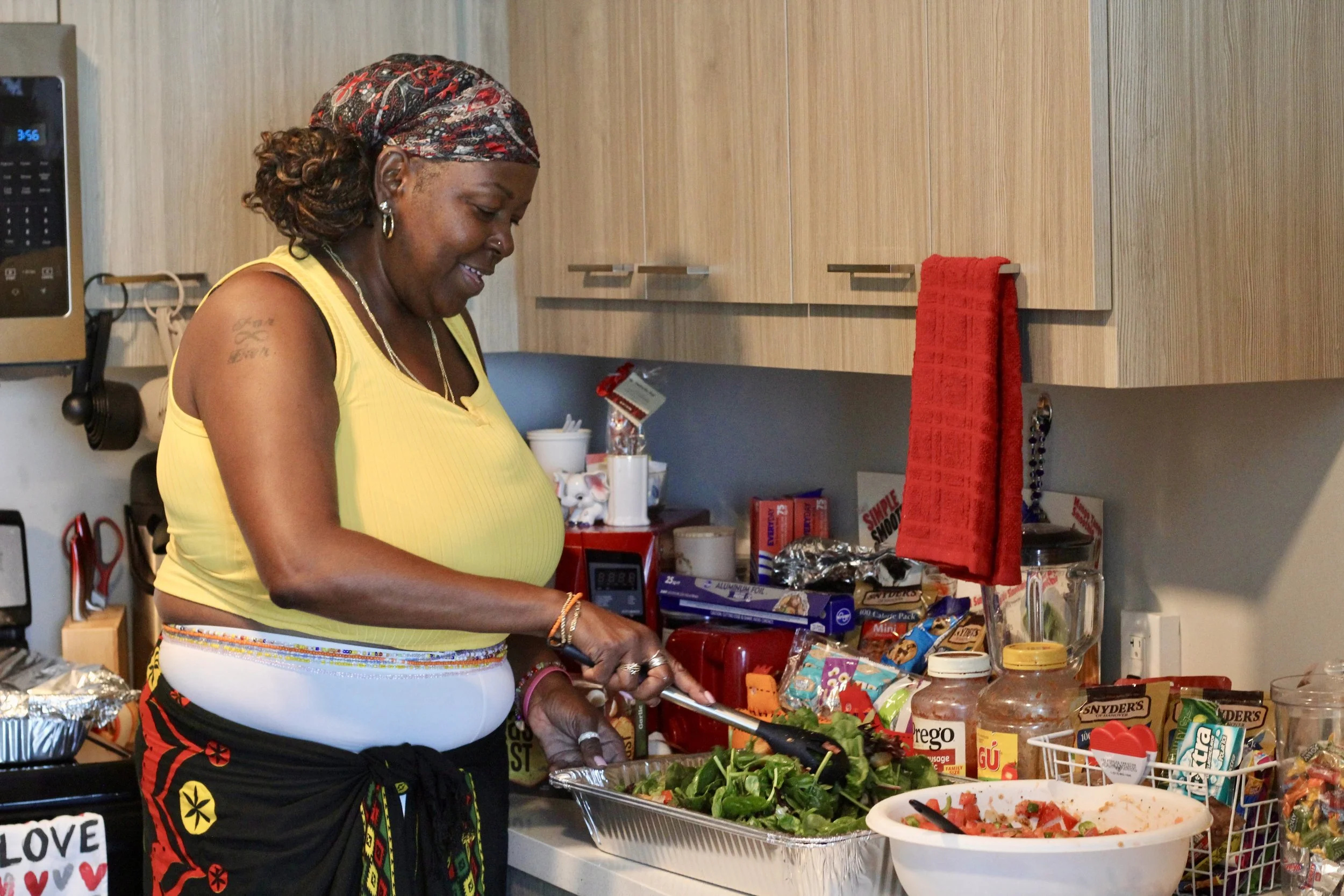
I’m not happy with my journey, but there is something in it that is fulfilling because it brought me to this community. I feel my assignment is right here.
Here people understand me, because they are me. We are the underdogs. We are the ones who have been disconnected from our families, disowned and rejected. Skid Row is where you make lifelong family, where you can be celebrated and not tolerated.
Skid Row is where I can finally be me.
‘Everything that glitter ain’t gold’
My mom died two years ago.
We were in and out with each other in my adult years, but I never stopped being her biggest cheerleader.
I know she still had that hurt inside because she would shut me down when I talked about all the wonderful memories I had with her as a child.
“I was going through so much,” she would say. “And I wasn’t there for you.”
“But you was,” I’d tell her. “Mommy, you was.”
I never blamed her for anything because she was a really good mom. When she was dying, I was her caretaker, just like she was for everyone else.
Lately I’ve been using a lot because I don’t know how to grieve. People can’t see it — they just see Ni Ni, dressed to the nines, hair done.
But everything that glitter ain’t gold. I learned from my mom that you can look great on the outside and still be hurting.
Black butterfly
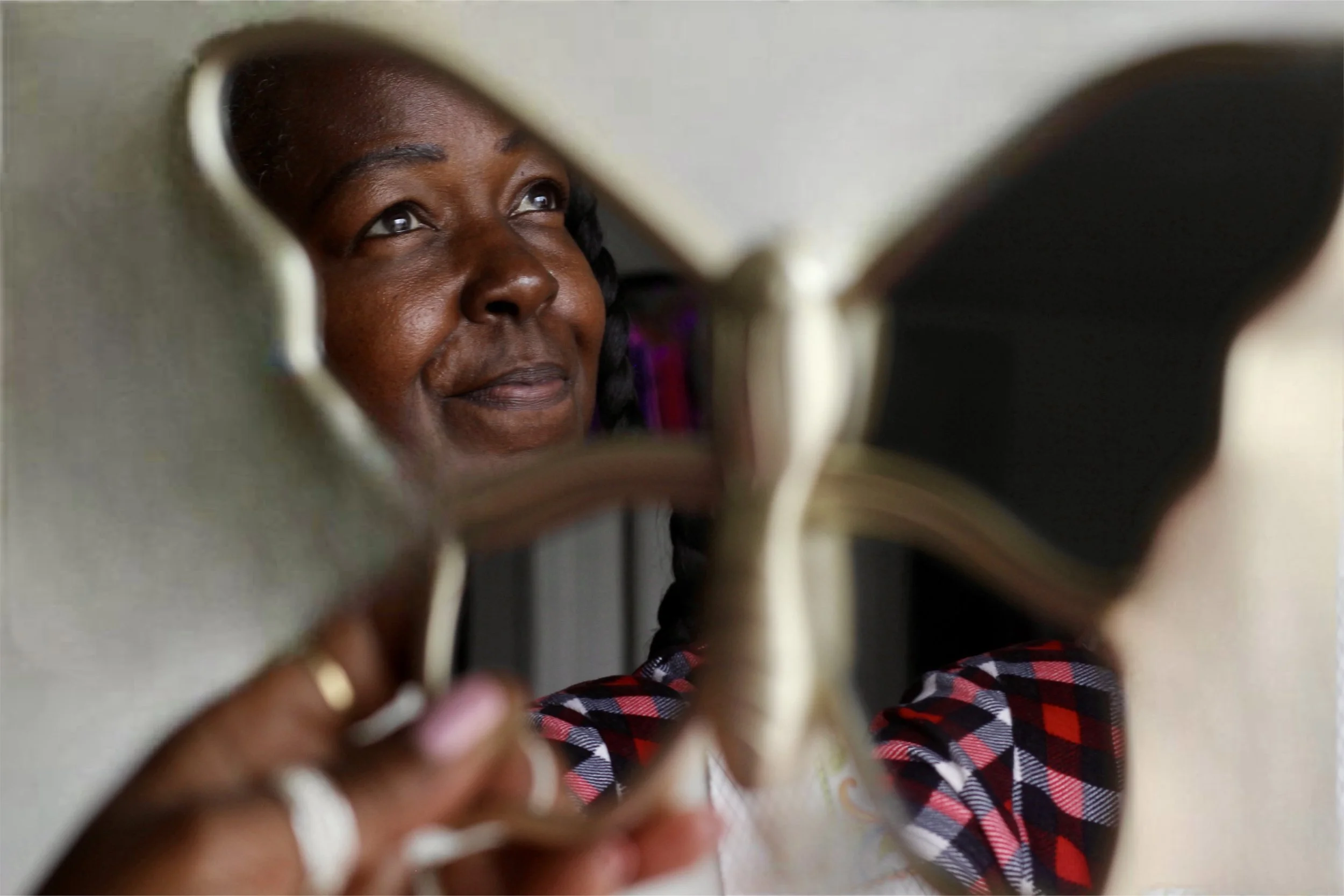
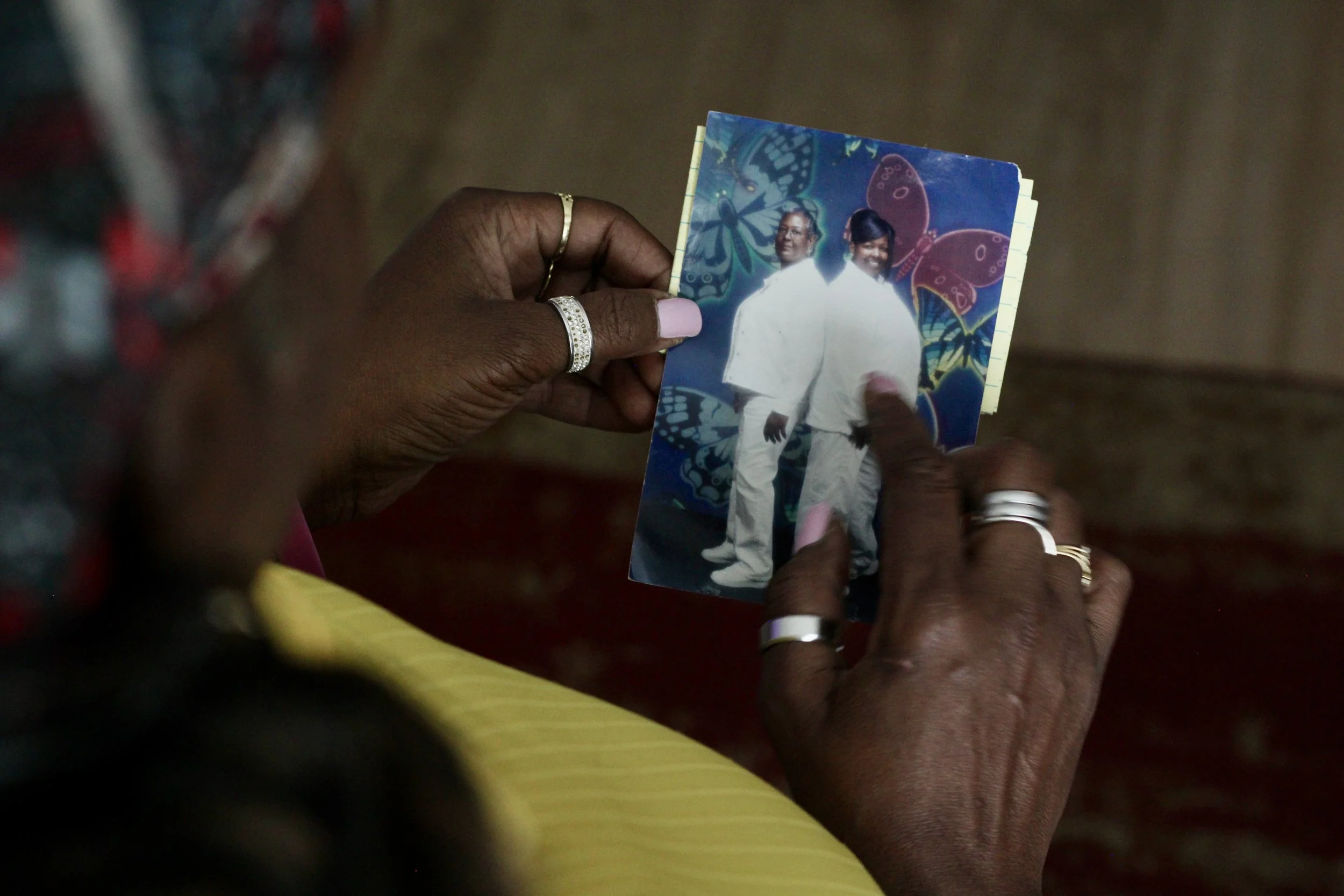
I have these butterfly mirrors on my wall because I love the transformation. A butterfly, it starts as a caterpillar, this ugly little creature. As it grows, it blossoms into a beautiful thing. I’m still growing into a black butterfly.
After my mom passed, my aunt gave me a letter that she had written to me just before she died.
—
Dear Janine,
You already know that I consider you my favorite daughter because you have never judged me despite the trials and tribulations you had to endure, probably because I was not able to deal with my own.
I want you to know that form the deepest part of my being, I am so sorry that I did not have the courage or strength to raise you and your siblings. I was in too much pain myself.
But with the faith I have in God, I did try to do better, and by the grace of God, we have come to have the very special bond.
I thank you every day for having the spirit in your heart to forgive me.
I’m so proud of you for having the strength to become the very beautiful person that you have truly become.
—
Five months later, I moved into this apartment. My mom never got to see it, but she is everywhere — in the bathroom when I fix my hair; at the kitchen stove as I cook and care for others; in the living room as I smile and entertain; in the butterflies’ reflection, mirroring my own.
She don’t know that I’m a lot like her, right down to her beautiful soul.
**
Author Janine ‘Ni Ni’ Blake is a daughter, mother and now ‘auntie’ to a Skid Row community that leans on her for warmth, delicious homemade meals and big, genuine hugs. She volunteers at Blue Hollywood Street Sanctuary (BHSS) every Thursday, serving hot chocolate, cocoa and treats with a huge smile and some of the best outfits in town.
BHSS is a community-based nonprofit organization and harm reduction program that provides street outreach services, case management services and community care for unhoused and precariously housed individuals in Skid Row, Los Angeles. This narrative project works collaboratively with residents to tell their own stories in their own words.