To Love, And Be Loved, Unconditionally
This project is supported by the Unshame CA campaign, funded by the California Department of Health Care Services (DHCS) through a grant administered by Shatterproof.
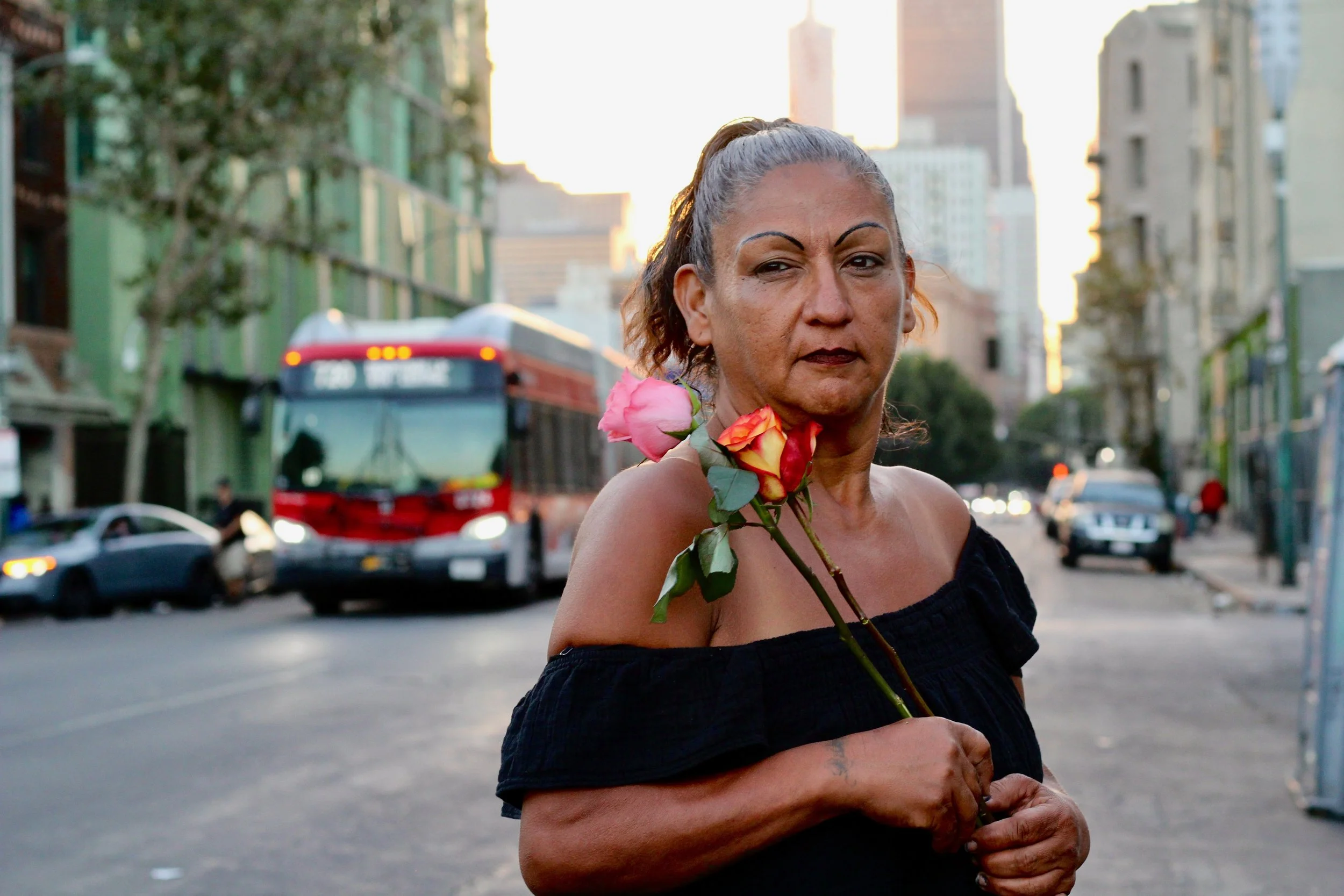
By Kathy Moreno
In conversation with Sara Habibipour
I was blessed with amazing kids.
When they were young, we were always together.
Some of my happiest memories are the ordinary moments we shared—going to the park, ordering pizza and having picnics with the kids and their friends.
Whenever they had a field trip, I would wake up early to make sandwiches for my kids and all of their classmates to eat on the bus. I still remember going with them to the Aquarium of the Pacific and the LA Zoo, watching them press their faces against the glass to see all the different animals. Over the holidays, we went to Utah so they could experience snowy Christmases.
Those moments filled me with so much joy. They were the kind of childhood memories I wish I had been able to share with my own mom.
I spent a lot of time volunteering at their school, supervising during recess and helping in the principal's office — so much so that some of the kids thought I was a teacher. I wasn’t there because I had to be. I wanted my children to know that being there for the people you love matters.
All my life, I had been seeking true understanding from family — a void that led me to cope in ways my kids didn’t yet understand. I wanted them to have what I didn’t: unconditional love.
I did my best to teach them this, even while I was secretly hurting. Soon, they would also be teaching me.
Learning to hide the pain
I can't even remember when I started drinking. Five or six maybe. My uncle used to buy us little four-ounce Budweisers for Christmas. He thought it was cute. But when I look back, it really wasn’t. I was already using alcohol to hide my pain.
We had fun as a family. Some of my happiest memories are from when we used to go on family camping trips to Lake Havasu. My grandparents would organize them, and my grandma’s entire side of the family would come along. We would swim, play games, barbecue hamburgers and hotdogs, and spend time together by the bonfire.
But everyone in my family drank a lot too.
Growing up, I lived with my mom, my aunt and uncle, and my grandparents. Everyone worked hard. My mom was an accountant, my aunt worked in telemarketing, and my uncle drove trucks. When they came home in the evening, we’d all gather in the living room and drink together. Even as a child I was a part of it.
My grandfather drank the most. He would wake up and immediately start putting back hard liquor — anything he could get his hands on, honestly. As the drinks started to pile up, he would get verbally violent. When my uncle was gone, we were a house full of women. My grandfather would yell, “I’m gonna kill all you bitches!” It scared me a lot, especially when I was really little, because I didn’t know what he might do. But, over time, his violent words became something I learned to endure.
When I was around three years old he started molesting me, usually while he was drunk. That happened until I was about ten or eleven. It made me feel gross, like I did something wrong. Even as a kid, I started drinking because it helped me feel numb. When I drank I didn’t have to feel the pain anymore.
The heavy alcohol use in our own home was never addressed. But other substances were condemned. When I started smoking weed at age twelve, my grandma would tell me “why can’t you just be happy with drinking?” My aunt and uncle would tell me that I smelled like a skunk. I was hurt that they couldn’t understand I was managing the best I knew how, just like they were.
And others, too.
One time when I was older, I was with my mom at Jack in the Box when we saw a woman who was seemingly homeless sitting outside and asking for money.
On our way out, I gave her some money and even bought her some food. I remember my mom scolding me afterward, saying I shouldn’t help drug addicts.
How do you know what she’s using? I remember thinking. That doesn’t show love.
After going through my own personal experiences with drugs, I ask something different: not what drugs are people on, but why are they using?
No one grows up wanting to be a drug addict. People don't wake up one day and decide that's the life they want. When I see someone struggling, I see the pain before the substance. I just want to understand what people are going through.
Deep down, I want to be understood too.
“Trying not to feel”
When I was a teenager, I started acting out, pushing my grandparents away. I joined a gang and started hanging out in the streets, not coming home from school.
When my mom found out, she yelled at me.
“I didn’t raise no gang member!” she said.
I felt judged, and it only pushed me further away. The gang, on the other hand, made me feel accepted, at least superficially.
When I was 16, I got pregnant with a baby girl. I was staying with my boyfriend at the time. I thought that we really loved each other and I was so excited about having a baby with him. But one afternoon after taking PCP, he started seeing things that weren’t there. Amidst his hallucinations, he grabbed me by my shirt and pulled me down the stairs. I immediately started bleeding. The next thing I knew, I was in the hospital.
The doctors told me that I had lost my baby.
Distraught and angry, I began to question God.
What did I do? I asked Him.
What did I do as a child to be molested? Now what did I do to have my baby taken away from me?
At that moment, something broke inside me.
I didn't want to be here no more. I didn’t care about my life at all.
And I started acting accordingly.
I jumped into cars with random guys I didn’t know. I walked through enemy neighborhoods. I tried taking pills. One time, while drunk, I tried to drown myself in the bathtub.
I didn’t know what to do with all that pain.
So, when drinking wasn’t enough, I started using crystal meth.
I was just trying to avoid feeling what had happened to me. But for years I didn't tell anybody. I was afraid of being judged — again.
New beginnings
A couple of years later, when I was around 20, I went to a rehabilitation program.
During one of the activities, the counselors asked us to write down our deepest traumas and throw the papers into a fire. With a broken heart and tears rolling down my face, I wrote down what my grandfather had done to me and dropped the slip of paper into the flames.
In that moment, I realized that despite everything, I didn’t hate him, only what he did to me. And in my own hurt, I started to think about his. I wondered what he had been through to do that to me years later. I wondered if he had been trapped in his own cycle of pain, and never able to break out.
I knew then that I wanted to forgive him, to give him the gift of nonjudgment that I had never received.
Just months after the program, I gave birth to my oldest son. I named him Raymond Renee after my grandfather. Perhaps it was the closure I needed.
After my son’s birth, I started to feel like my life was turning around. I stopped going to my gang’s neighborhood. I stopped using drugs. I focused on my son. And for five years, I stayed away from alcohol and drugs.
But when Raymond Renee was in kindergarten, I started to relapse, little by little. At first, no one knew.
I was a high-functioning addict, much like members of my family, who held down full-time jobs when I was a kid. Eight years after having Raymond Renee, I gave birth to another baby boy, Christopher, and a year later, a baby girl, Ann Marie.
As my family grew, so did my responsibilities. I became the primary caregiver for my uncle while he battled bone cancer, and I also spent a lot of time caring for my grandmother after she was diagnosed with dementia. Through it all, I was raising my children, making sure they had a roof over their heads and everything they needed, all while volunteering at their school. My kids, at this early age, knew only about my enthusiasm and participation.
But my aunt saw straight through to my addiction.
“You’re always gonna be a drug addict,” I remember her saying repeatedly.
“You’re always gonna be a lowlife.”
“Your kids are never gonna amount to anything.”
Inside, I was still hurting, but I knew that healing wouldn’t come through shame. I had to find another way.
Finding support through my children
When my kids were teenagers, I was deep in addiction. I sometimes came home at night drunk and acting stupid. I was afraid my children would grow to resent me. So, I sat down with my kids and told them directly about my addiction.
It was a very painful conversation. Understanding for the first time what I had been going through, they apologized to me for not being “better kids.” That hurt me, but I was also blown away by their love, their lack of judgment.
People think parents teach their children everything. But sometimes it's the other way around, too.
“How are you, Mom?”my oldest would ask after I woke up, hungover and hurting.
“How do you feel?”
“We love you.”
People tell me now that I'm a light, but I think I get that from my kids.
They never resented me — they always showed me love and care, even in my darkest moments. They showed me a relationship that reflected the unconditional, non-judgemental love I had been seeking my entire life.
Understanding that I needed time to heal, Raymond Renee, giving me the ultimate gift of love, took guardianship of his younger siblings while I went into recovery.
Years later, Raymond Renee started working at a homeless shelter in Pomona in his 20s. He knew that I liked to help people — that’s a characteristic that my kids and I all share. He encouraged me to apply, and I was soon hired.
I really loved the work. It helped me see people differently. I learned everybody’s names as soon as they came in. I didn't want people judging me for my past, and I tried not to judge anyone else either. Before long, I felt like everyone there was family. It felt like an extension of the mother in me, and also of what my own children had taught me about showing up for others with unconditional love.
Then I lost my job.
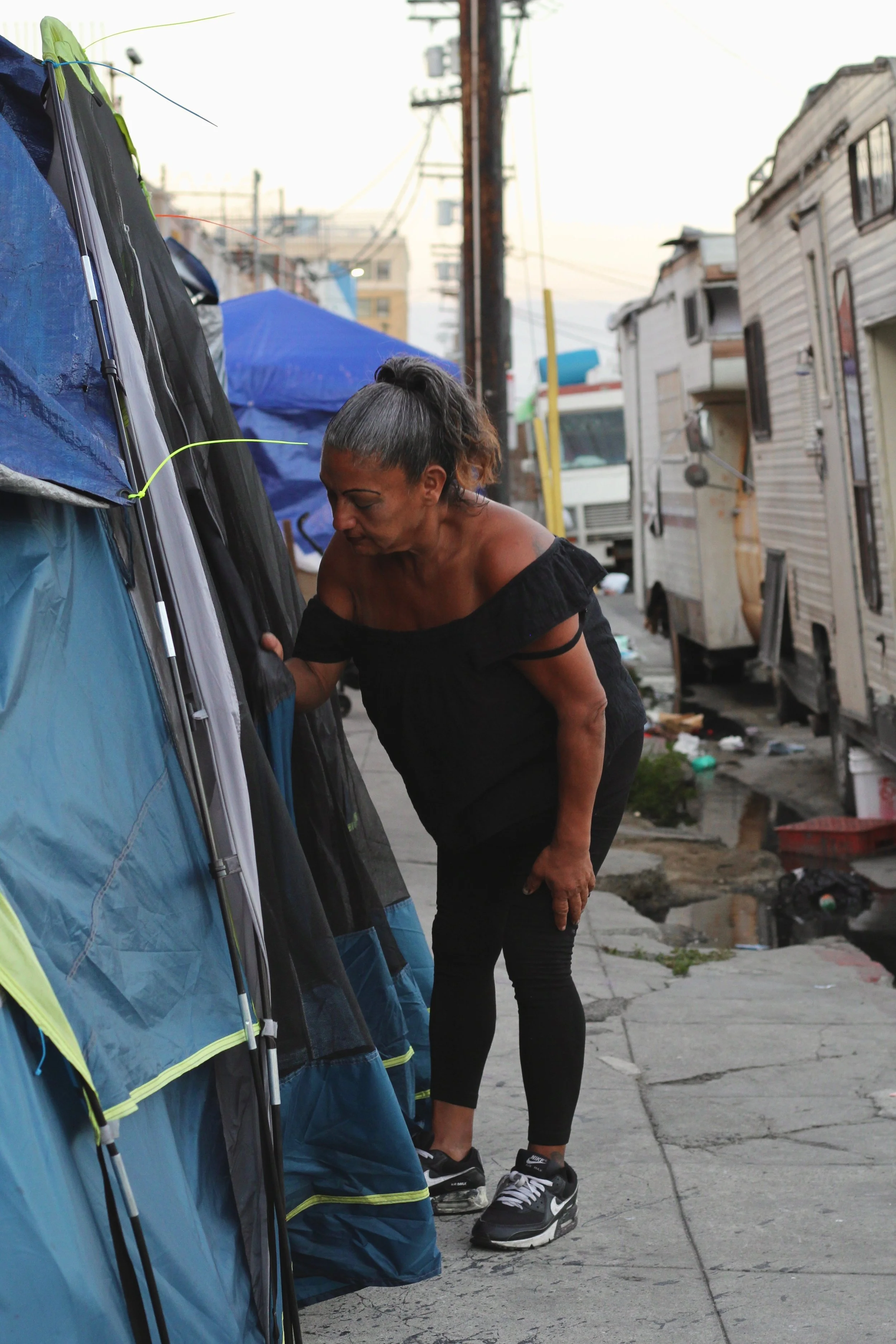
For the first time in my life, I was truly homeless — living in a one-person tent and trying to figure out where I could shower, do laundry, and get through the day.
Giving it back
A few months ago, on the bus, I met someone from Skid Row, who told me about a lot of resources here. At that point, I was tired. I decided to give it a try.
Quickly, I found the Street Sanctuary, and a few weeks later, I got hired on the outreach team. It felt good to work again, to show nonjudgement in action, to be a source of light.
But soon I realized that it was the light I needed, too.
When I was at the lowest points in my life, I never had a community to lift me up. When I lost my daughter, I felt alone, unwanted, like a mistake.
At the Street Sanctuary, people around me noticed when something was wrong before I said anything. It was what I’d wanted to give to others all my life. And it was what I'd been missing, too.
Skid Row isn't where I wanted to end up, but I'm at peace with it. I think God brought me here for a reason — to help people, to spread unconditional love, and to receive it myself.
The Street Sanctuary isn't just a workplace now; it’s home. When I'm not working, I'm still here, because I don’t feel judged. I’m me and I’m free.
Even now, I still hear my aunt’s voice in my head sometimes. I still hear my mom judge the woman outside the Jack of the Box. I still feel the pain of having to confront my children about my addiction. But life has taught me that people are more than the worst thing that's happened to them, and they're more than the mistakes they've made.
That unconditional love has been given to me — first through my kids, and now through the Street Sanctuary.
And now I want to give it back.
**
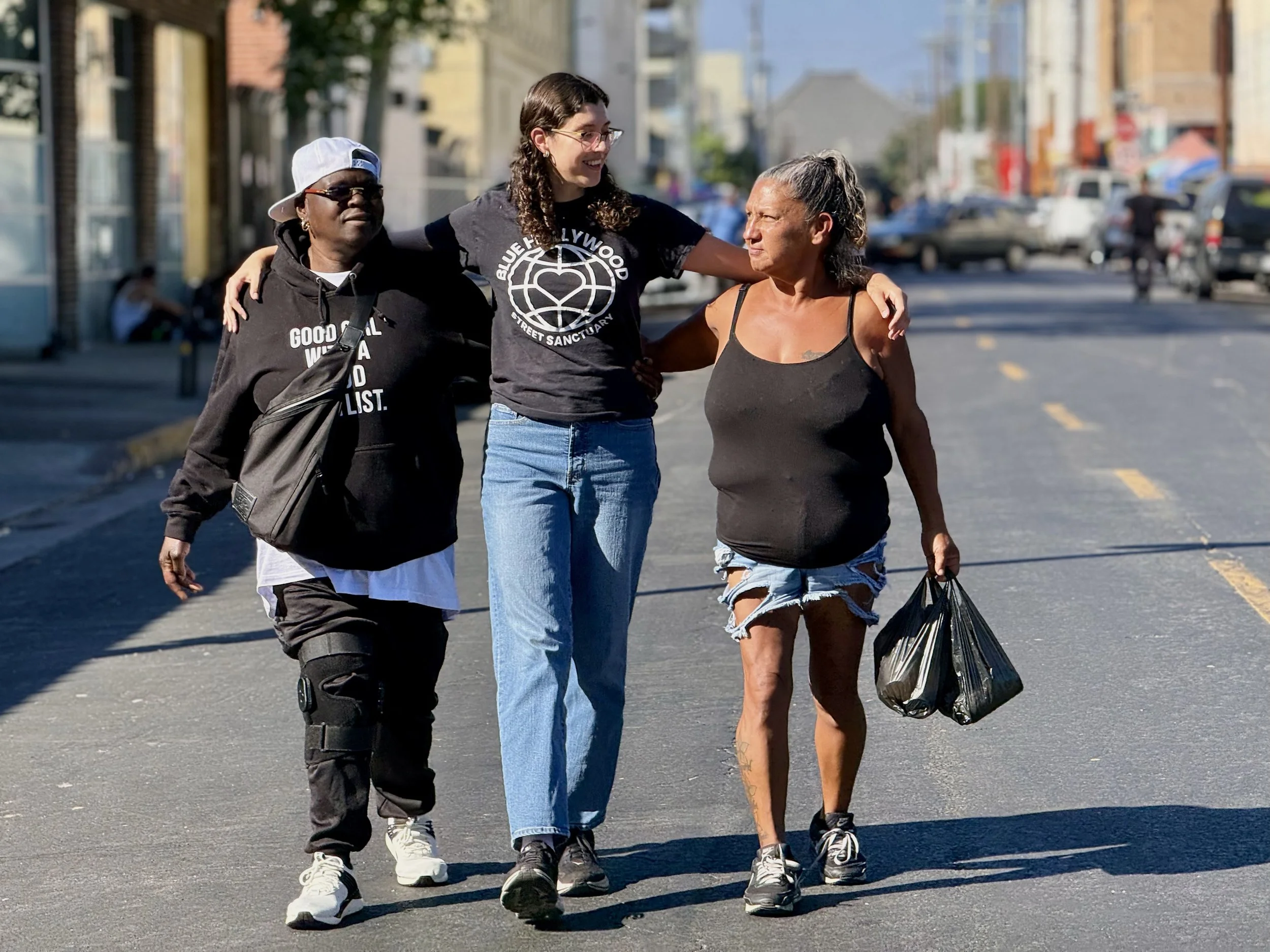
Author Kathy Moreno works three to four outreach shifts per week at BHSS, where she connects her Skid Row neighbors with essential public health supplies and helps build community through her vibrant energy and the light she brings to those around her. Outside of her shifts, she can often be found listening to music, dancing, and playing dice at the Sanctuary. She currently resides in a tent in Skid Row.
BHSS is a community-based nonprofit organization and harm reduction program that provides street outreach services, case management services and community care for unhoused and precariously housed individuals in Skid Row, Los Angeles. This narrative project works collaboratively with residents to tell their own stories in their own words.