Deinstitutionalizing
This project is supported by the Unshame CA campaign, funded by the California Department of Health Care Services (DHCS) through a grant administered by Shatterproof.
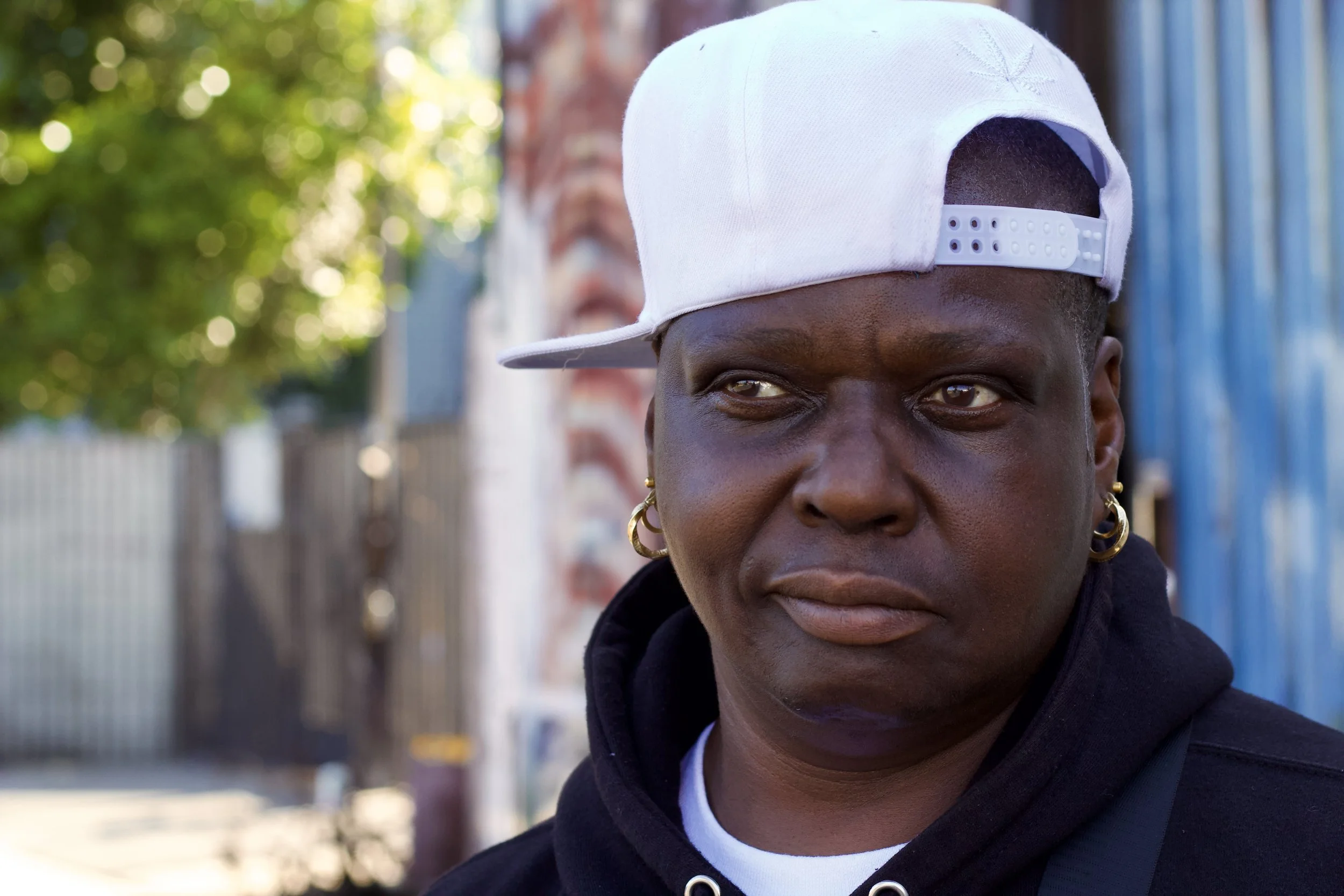
By Lawanda “Fudge” Garrett
In conversation with Amelia Rayno
Snap back to age 13.
I was a smart kid, chubby, and shy — a true Mama’s baby. I used to cry when she left for work.
I had a bully. Her name was Claudette. She and her friends would push me, jump on me. She kept me from walking down the street.
One day, my sister-in-law asked me to go to the store. I didn’t want to tell her that these kids had been taunting me.
But I was scared. So I grabbed a knife from the kitchen.
At the corner store, they were waiting for me. Even the clerk knew. When I went inside, he offered me a little pole to defend myself. Maybe if I had taken it, they would have called it self defense. But since I took the knife from the kitchen, it was premeditated.
In a moment of courage, I fought back. In the scuffle, Claudette got stabbed.
I was off to Juvy.
And that one childhood decision, made out of fear, set the tone for the next 34 years of my life.
From that point on, I had a very violent upbringing — by the state.
Between the ages of 13 and 47, I was locked up, with occasional months — and only twice, a full year — in between incarcerations.
Basically, I was institutionalized.
I was taught that I deserved it.
Now, I’m 56 years old. But my deinstitutionalization is still adolescent.
Nine years out of the system, I’m still learning what it means to be free.
Cursed, and owning it
Growing up, I was the baby of six kids in a single-parent home.
My mom had been through a lot of trauma herself, but I saw her as the perfect mother. All the kids in the neighborhood came to our house to watch cartoons, and she would watch TV and laugh with us. My mom was very intelligent; a nurse. She had a whole bookshelf of leisure books and dictionaries, and she would have us look stuff up. She always picked up my favorite cereal when she went to the store.
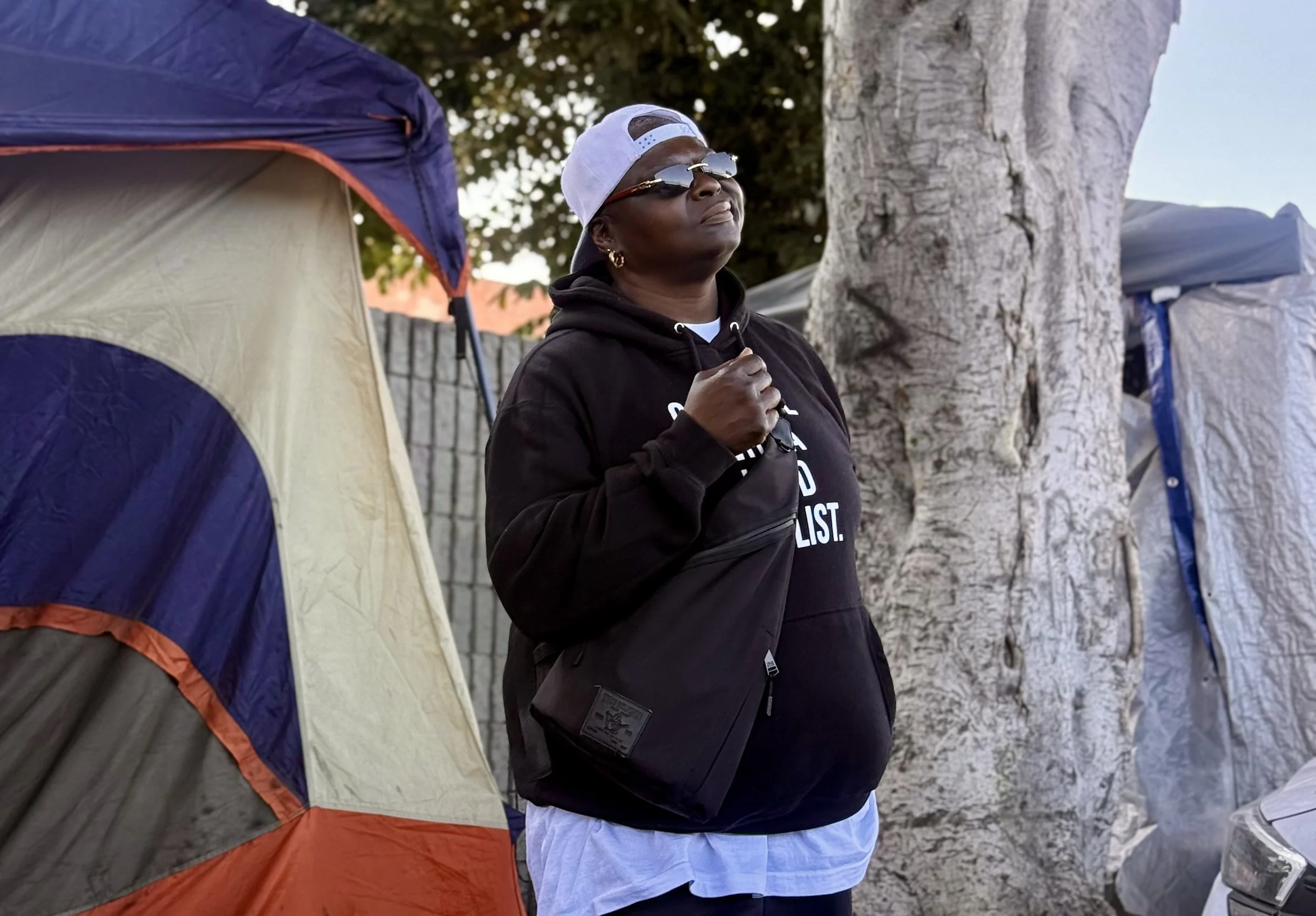
She was a cool mom. But she had her hands full. She probably never realized how bad the bullying was, or where fighting back could land me.
In that first experience in Juvenile Hall, at age 13, I started to feel things that I couldn’t explain. One day, I started cutting myself with a paper clip.
No one ever sat me down and asked me why I did that, what was wrong. Instead, I was hog tied, forced into a straight jacket and placed in a rubber room.
I’ve told almost no one about that moment. Sometimes a thing is so horrible, you go into shock, you willfully forget so you don’t have to relive the pain. Even then, I was trying to protect myself from that. So instead of talking about it, I started acting out.
I got out of Juvy, and back in junior high — but not for long.
After a teacher gave me an F in class, I was so mad, I sat down at my typewriter and wrote a whole letter.
‘I’m gonna put sugar in your gas tank and throw eggs at your car.’
When the bell rang, I stupidly left the letter in the typewriter. They took it to the principal and I got expelled.
After that, I was bussed out to a “Continuation School” — that’s a school where bad kids go. There was a probation officer on site and he was allowed to swat us with this huge paddle with holes in it.
One day, I took a bunch of pills before coming to school. It was another cry for help, I think. When they realized my life was in danger, the probation officer took me to the hospital to get my stomach pumped.
Then it was back to Juvy.
I felt like I was cursed, and I might as well own the role.
Keeping the pain inside
Whenever I was briefly in the free world, it was easy to run wild.
My mom stopped spanking me after I started getting arrested — I guess she figured that being on felony probation as a child was enough punishment.
And she, too, was suffering.
By the time I was a teenager, she was very sick. She had diabetes and asthma complicated by bronchitis. One of her lungs collapsed and soon she was hauling around an oxygen tank to breathe.
I started smoking primos — crack-laced cigarettes — when I was out. I started dealing, too. First, PCP and later crack.
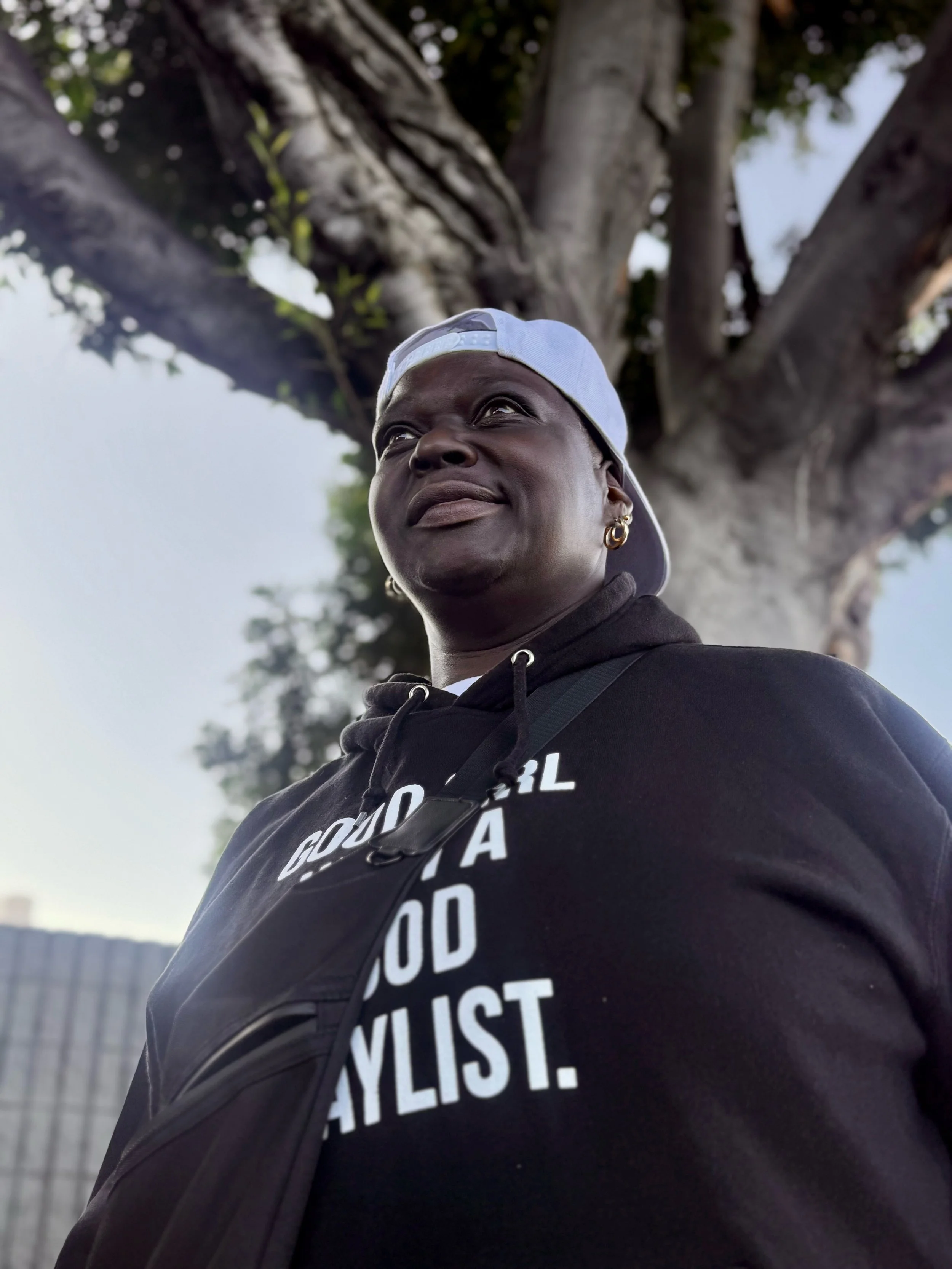
I hid it all from my mom, or so I thought. Maybe she saw my path of self destruction and felt powerless to stop it. She did her best. Even when she was sick, she traveled to come see me in Juvy. When I was in jail, she was the only one who wrote me.
One time she told me she could only rest when they had me in policy custody.
I was her baby, and I was running the streets, whereabouts unknown, putting myself in all kinds of danger. Maybe she thought in the system I was actually safe.
But I wasn’t.
The inexpressible pain had me beating my head against the wall, waiting for her to come pick me up. Had me in and out of the infirmary.
Years passed, and I went from Juvy to jail — always on drug charges.
In County, I began seeing the jail psychiatrist. But the more I opened up, the more I was punished.
I was placed on what they call suicide watch. They stripped me of my clothes and placed me alone in a cell with a slab of metal for a bed — no mattress, no socks, and AC blasting out the vent.
Every time they delivered toilet paper, I would wrap it around my feet because I was so cold. I was there for two weeks, the whole time wondering how this cures a person who feels depressed enough to hurt themselves.
So what I learned was to keep the pain inside, to bury it deep. What I learned is that when I was hurting the most, those who were in my charge could be even meaner to me than I could be to myself.
Hard is better than heartbroken
At age 21, I got pregnant. Around three months later, I was back in prison.
When I went into labor, they brought me to the hospital, and I had my beautiful baby boy.He had a full head of hair and dark chocolate eyes. A surge of love I didn’t even know I had welled up inside of me. But of course, I had to go back to the pen.
Even as sick as she was, my mom was still my right-hand woman. The plan was for her to care for my son until I got out. She was sick but excited to have a baby in the house again. But one month later, she had a stroke and four months after that she was gone.
When I found out, I had a nervous breakdown. I felt like I had killed her.
My son ended up with his dad’s family, and months later, they went to probate court and adopted him without my consent.
Around age 24 or 25, I got out again, devastated. My son was gone. And my mom, whose house I had always paroled to, was too.
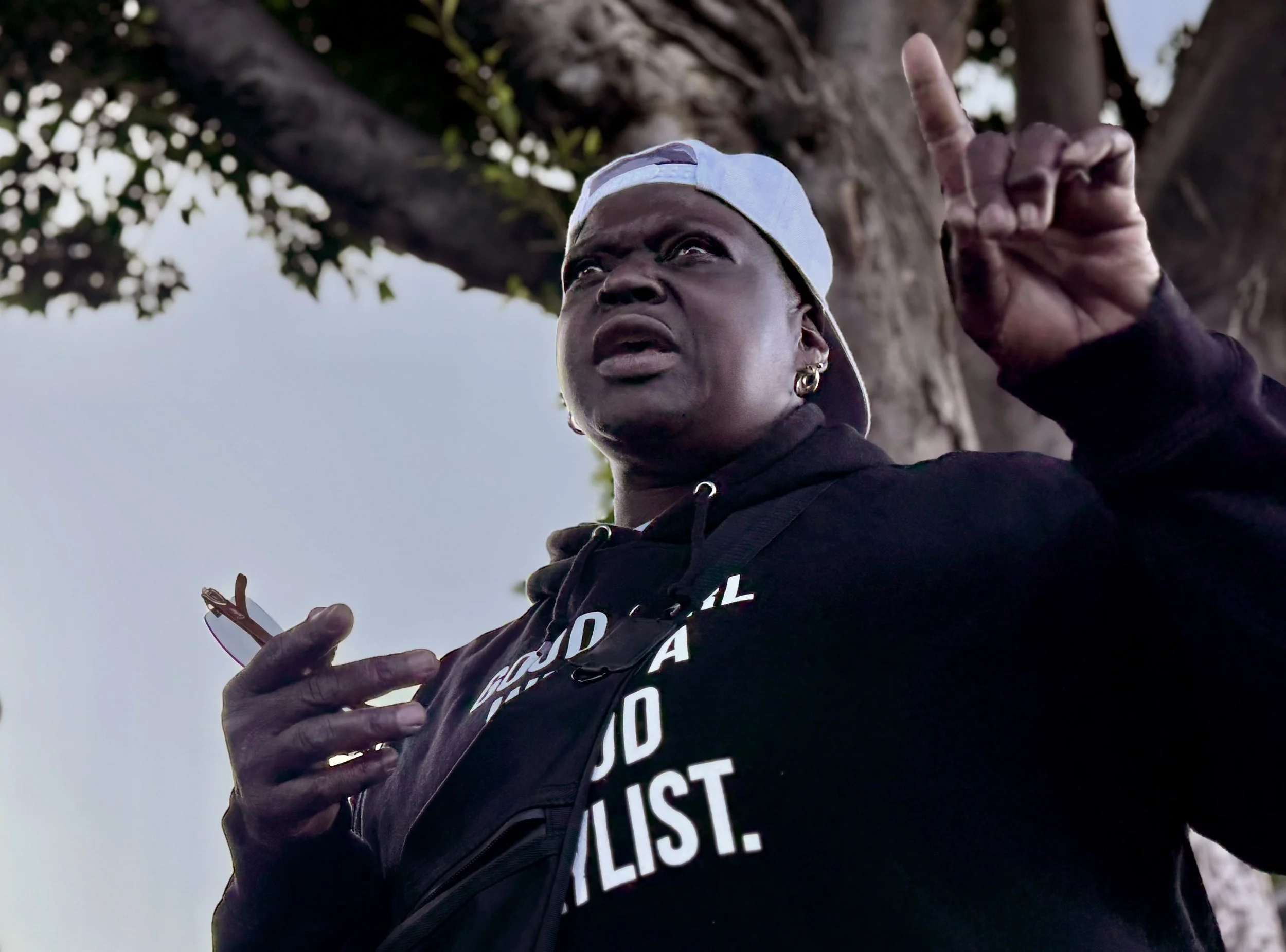
It was my first time being homeless, and I had no idea what to do.
I really didn’t want to keep selling dope. But my options were thin. I was couch-surfing, staying overnight at hotels and in between, bathing at laundromats and Church’s Chicken. My record didn’t exactly make me an enticing hire. Pumping gas and pan handling was hit or miss.
In those days, there were hardly any programs for parolees. They would turn you loose with $200 gate money and nowhere to go.
So with no other prospects on the horizon, every time I got down to my last $50, I’d buy a sack of dope so I could sell it and keep my money.
Eventually I’d get picked up, and the cycle would begin again.
I came to expect it. Over time, with no place else to go apart from various shelters in Skid Row, prison became home. The outside world kept rejecting me, but within the penitentiary’s unwritten code, I had found new ways to thrive.
I would fight in a heartbeat. Anyone who fucked with me got smashed; no one got a pass. I earned a mean reputation, and with it a type of admiration.
All my life, my anguish and despair had only brought me more punishment. But I was quickly learning that rage, on the other hand, reaped respect. Hard was better than heartbroken.
That response to pain, alone, was understood.
What it means to be free
In 2017, I got out of prison for the last time. Two years later, I caught a case again, and it looked like the cycle was doomed to repeat.
But this time, I had a new, ambitious public defender in my corner.
The previous year, a new California statute allowed diversion from prison for individuals managing mental health disorders.
I was the first such case in the presiding judge’s court. And she granted it to me.
As part of the treatment plan, I started getting medication injections for schizoaffective and bi-polar disorders. I’d been prescribed psychotropic meds in prison for years but took them very inconsistently. I honestly didn’t think I needed all that. But soon after starting the injections, I realized I wasn’t walking around like a zombie anymore and I wondered if maybe I always had.
After that, I never caught a case again.
I committed to stop selling dope, a survival hustle made less necessary after I was awarded Supplemental Security Income (SSI), having been denied a few times before.
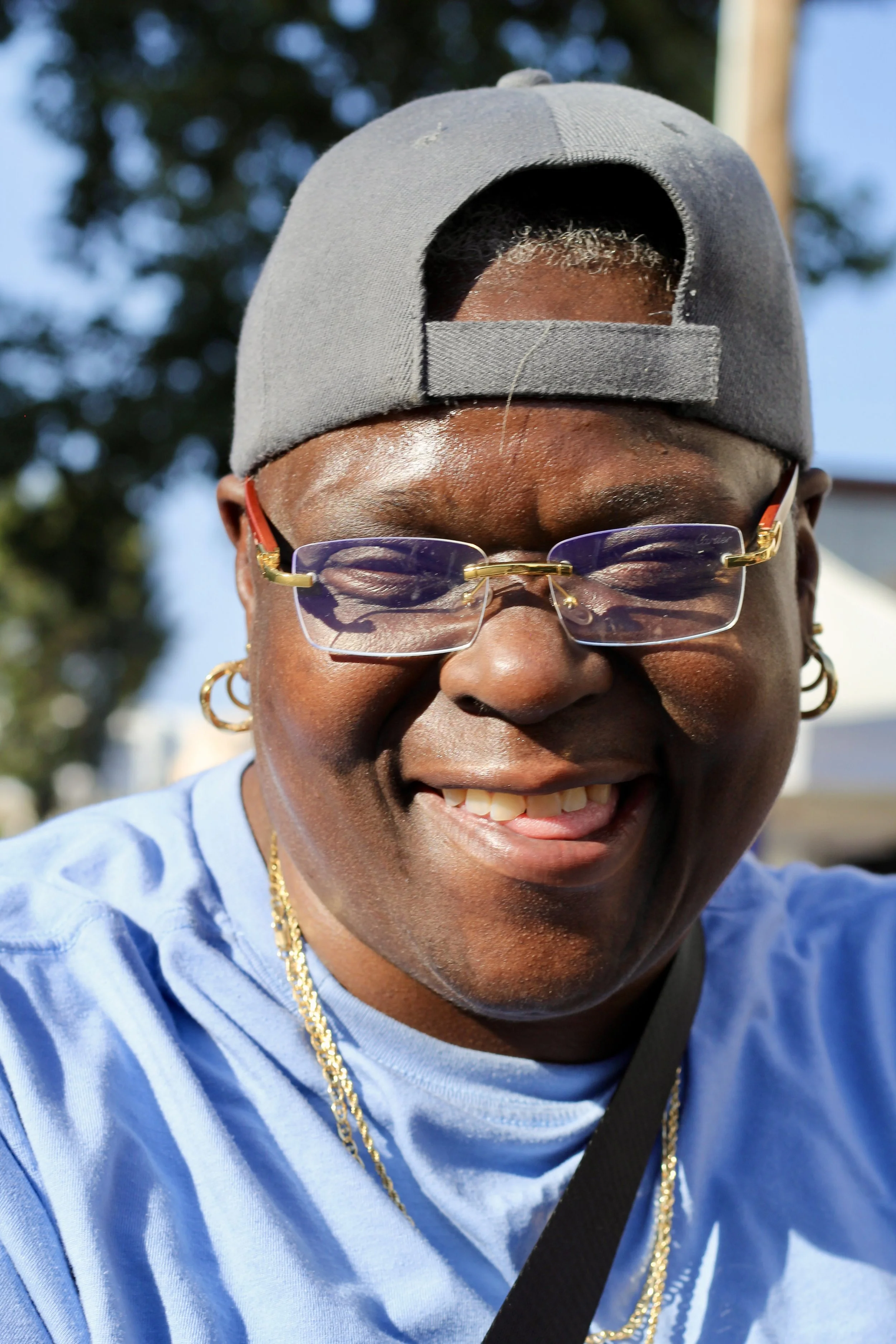
I found new community in my Skid Row neighborhood, and people who admired me not for my meanness, but for my joy. I became a totally different person than I was Inside — someone known for my big dimpled smile, obligatory hugs and scripture verses at the ready.
Eventually, I completed a housing program, received a Section 8 voucher and moved into a new apartment in Hollywood.
Now, I regularly return to Skid Row because it’s where my chosen family is, and where I finally feel purpose. My journey, with all of its hardships, has given me a window of understanding with countless others. I love to pray for people and try to give them some kind of peace.
I want that for myself, too.
Most people have no idea what I’ve been through and perceive me as the most cheerful person on the block.
But though its been nine years since I was incarcerated, in some ways I’m still imprisoned.
To keep moving forward, I’ve buried a lifetime of trauma. I still smoke primos because it stops me from thinking too much. I can’t fixate on what was stolen from me — the decades, the experiences, the comfort, the redemption — because the pain is still there waiting, unbearable.
When I talk, I cry, and when I cry, it hurts.
Even though I’m no longer punished for my sadness, my inner child is still afraid to be vulnerable.
I want to tell her that she’s safe.
That she’s seen.
That she’s loved.
That deinstitutionalization is not just about physical walls, but internal ones, too.
And that I am still learning what it means to be free.
***
Author Lawanda “Fudge” Garrett is a mother and grandmother — she remains in contact with her son and his three children, who live in Texas and whom, she says “give her something to live for.” She is an active community member in Skid Row, known for her giant hugs, therapeutic instincts and quickness with prayer.
BHSS is a community-based nonprofit organization and harm reduction program that provides street outreach services, case management services and community care for unhoused and precariously housed individuals in Skid Row, Los Angeles. This narrative project works collaboratively with residents to tell their own stories in their own words.